Short answer: a fence in Central Alberta has to handle Prairie wind, freeze-thaw cycles, and (in many neighborhoods) your municipality's rules. The right fence for your property depends on what you're trying to accomplish, what your neighbours have, and how much maintenance you want to sign up for.
The main fence materials
Wood (pressure-treated or cedar)
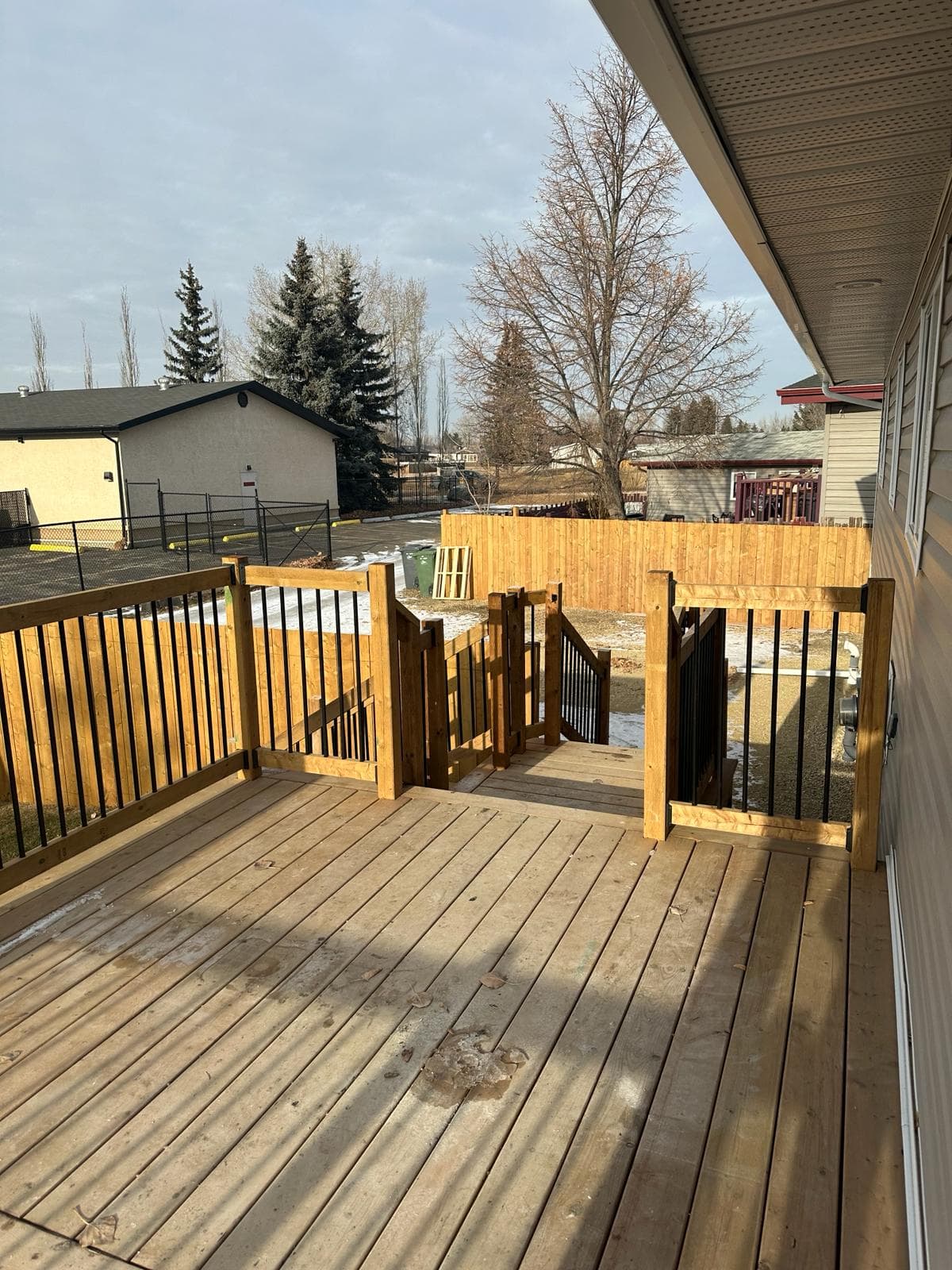
Still the most common in Central Alberta. Pressure-treated is the budget pick. Cedar is more expensive but ages beautifully and is naturally rot-resistant. Both require sealing every few years to keep them looking their best — and to extend lifespan.
Vinyl
Higher upfront cost, much lower maintenance. Doesn't rot, warp, or need staining. Holds up reasonably in our climate but can get brittle in extreme cold over many years. Often the choice for homeowners who'd rather pay more upfront and never think about it again.
Chain link
Practical, affordable, durable, transparent. Good for dog runs, property lines where you don't care about visual privacy, and anywhere a barrier matters more than the look.
Ornamental metal (aluminum or steel)
The premium option visually. Aluminum doesn't rust, is lightweight, and lasts a long time. Powder-coated steel looks similar and is stronger but can rust over decades if the coating chips. Common around front yards, pools, and gardens where you want a finished look without blocking the view.
Decisions that move the budget
- Length and height. Linear feet times height = the starting math.
- Style. Privacy (no gaps), semi-private (small gaps), or open (lots of space between pickets).
- Post installation. Concrete-set posts (the way to do it for any fence that needs to last) take more time and materials than driven posts.
- Number and style of gates. Gates need more framing, more hardware, and proper hinges.
- Grade changes. A flat yard installs faster than a sloped one that needs stepped or racked panels.
- Existing fence removal. Sometimes the old fence comes out easily; sometimes it's a half-day project of its own.
Things to check before you build
- Property line — survey or stake locations confirmed. Building a fence on your neighbour's side of the line is a real problem to fix later.
- Setbacks and height limits — most Central Alberta municipalities have rules. Check with your local planning department.
- Bylaws on materials and style — some neighbourhoods (especially newer ones with architectural guidelines) restrict what materials are allowed.
- Utility locates — call before you dig. Always. Underground gas, electric, telecom — hitting them is expensive and dangerous.
- Talk to your neighbour — if it's a shared property line, you may be able to split costs. Either way, it's less awkward to mention it before construction starts than after.
Planning a fence project in Central Alberta? See our full services or check our project gallery for finished work.