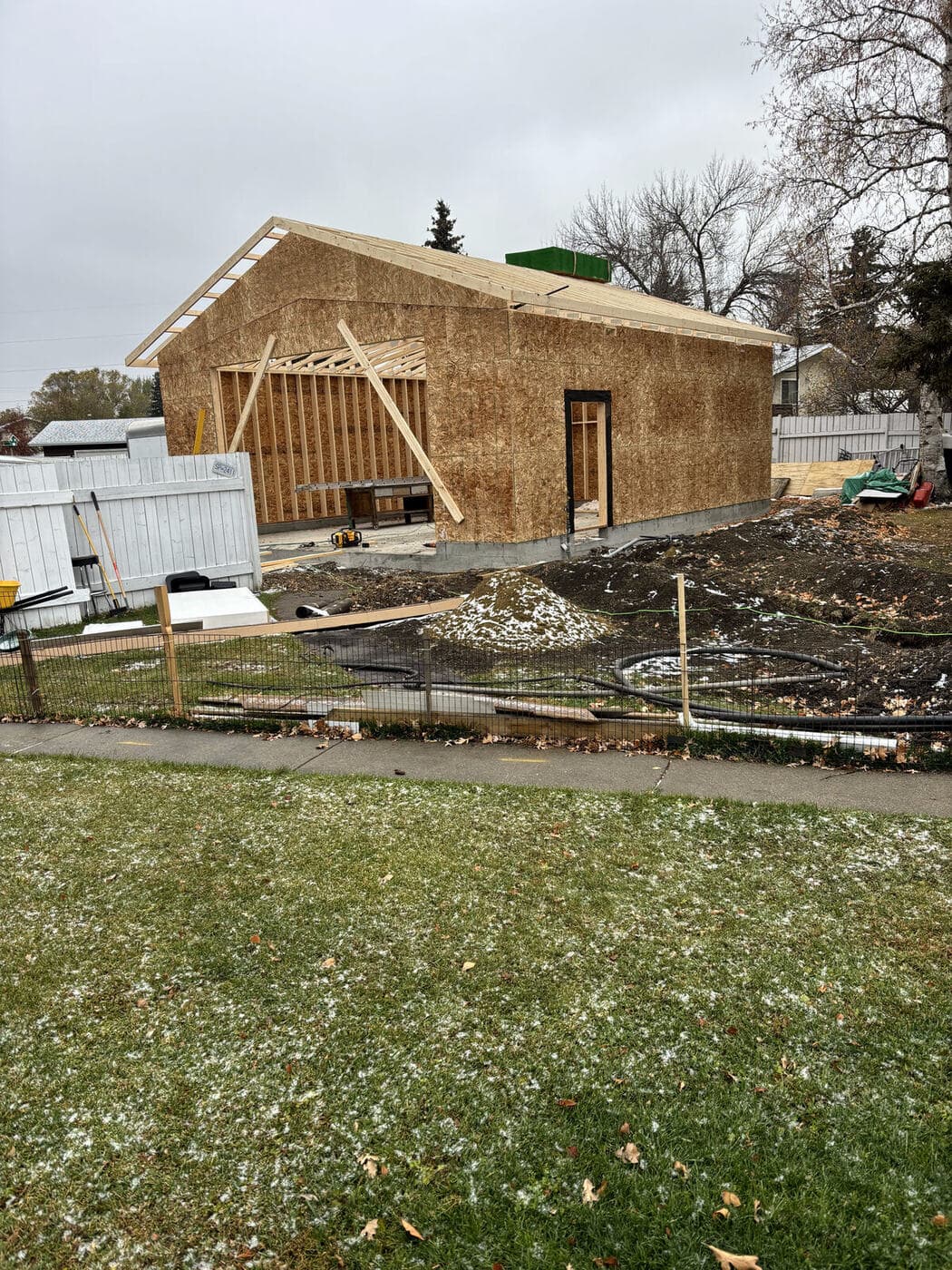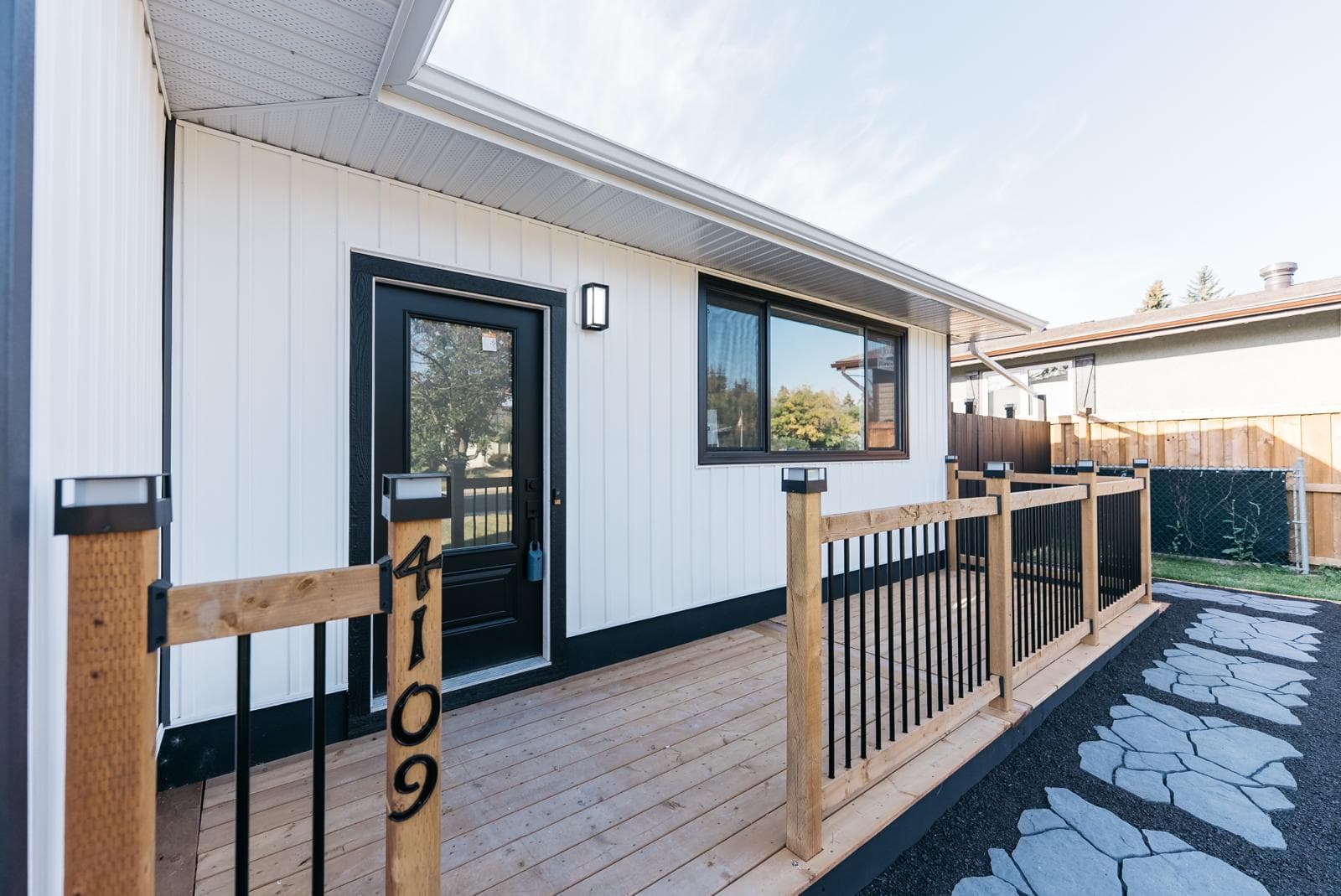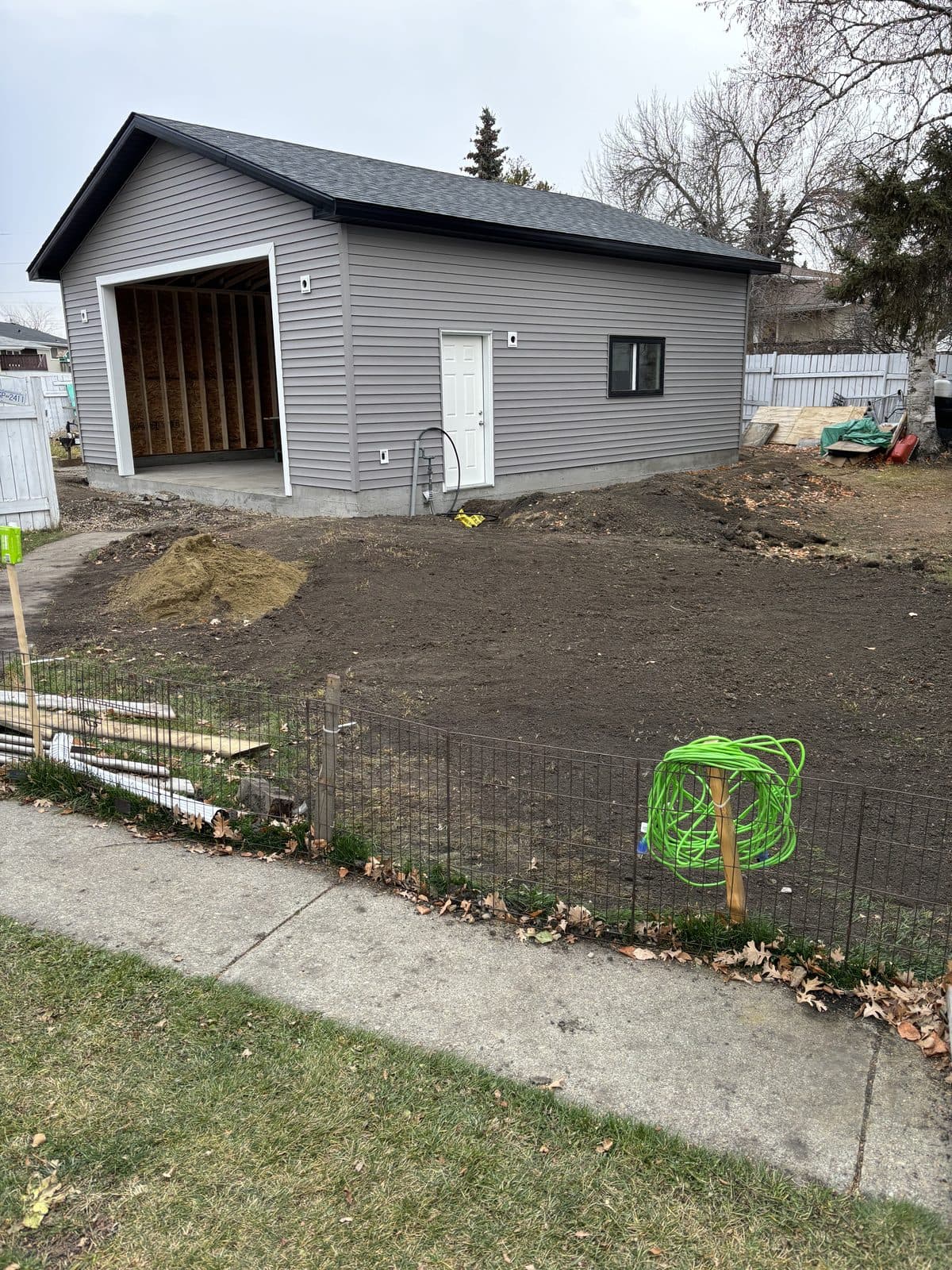
Short answer: the cost of a detached garage build in Central Alberta isn't one number — it's the sum of about five or six decisions you'll make before a shovel ever hits the ground. Two garages that look identical from the street can cost very different amounts depending on what's underneath them, how tall they are, whether they're insulated, and what the inside looks like.
We're not going to throw a price at you on this page. What we will do is walk through the real decisions that move the budget so you can have a sharper conversation with whoever you're getting quotes from — including us.
The decisions that actually move the number
1. Size and footprint
Obvious one, but worth saying clearly: every extra square foot adds material, framing labor, roof area, concrete, and finish work. The jump from a 20' × 22' single garage to a 24' × 24' double isn't just a bit more — it's a meaningfully different project. And a 30' × 40' shop is a different category entirely.
Worth thinking through what you actually need. A common regret we hear is “I wish I'd gone one stall wider.” A less-common regret: “I built too big.”
2. Foundation type
This is one of the biggest cost variables and it doesn't show in photos. Your three main options:
- Thickened-edge slab on grade — most economical, common for standard residential garages on well-drained lots.
- Frost wall with floating slab — adds frost protection for our climate, more material, more labor, longer timeline.
- Full basement under the garage — turns a garage into a much bigger project (excavation, walls, waterproofing, drainage) but gives you bonus square footage. Common for garage-suite builds.
Your lot, soil conditions, and the local building inspector all weigh in on what's appropriate. A site visit answers this faster than anything you can read online.
3. Roofline and ceiling height
A standard gable roof with 8' walls is the baseline. Once you go to:
- 10' or 12' walls (to fit a lift or a tall truck), or
- A taller roof pitch (which adds attic storage but also more material), or
- A more complex roofline (hip, dormer, attic windows),
…framing labor and material costs go up. None of these are bad calls — they just need to be in the budget on purpose.
4. Insulation and interior finish
Are you building a cold shell, an insulated workshop, or a finished-inside heated space? Each is a different project:
- Cold shell: framing, sheathing, exterior, overhead door — nothing inside. Cheapest by far.
- Insulated: batt or spray foam insulation in walls and ceiling, vapour barrier, sometimes drywall taped to mud only.
- Finished interior: drywall, primer, paint, sometimes epoxy floor, hung lighting, hose bib, finished electrical with outlets every few feet, sub-panel from the main service.
- Heated: add a heat source (in-floor hydronic, overhead unit heater, etc.) — both an equipment cost and a utility-tie-in cost.
5. Detached vs. attached
An attached garage shares a wall with the house, which means tying into existing foundation and roof, code-required fire-rated separation, and (often) more complex permitting. A detached garage stands alone and is generally simpler to build but requires its own foundation, its own roof tie-ins, and a service trench if you're running power or water from the house.
Neither is automatically “cheaper” — it depends on the lot, the existing house, what services you want in the garage, and what zoning allows.
6. Door, windows, and overhead opener choices
Easy to overlook but not trivial:
- Overhead door: standard panel vs. insulated vs. carriage-style vs. glass-panel modern. Big visual difference, real cost difference.
- Walk-through door + windows: more openings = more framing + materials + labor.
- Opener: chain vs. belt-drive vs. wall-mount jackshaft (needed if you have tall walls and want a high-lift door).
Permits in Alberta — what triggers what
In Alberta, any garage over 10 square metres (roughly 108 sq ft — so basically every real garage) requires a building permit. You'll also typically need a development permit from your municipality, which addresses zoning issues like setbacks, lot coverage, and height restrictions.
Each town has its own rules:
- Setbacks from property lines, lanes, and the main house — varies by town and zone
- Maximum height (often around 4.6 m / 15 ft for accessory buildings, but check)
- Maximum lot coverage — total floor area of all accessory buildings as a percentage of the lot
- Fire separation requirements if the garage is close to a property line or other building
The fastest way to find what applies to your lot is your municipality's planning and development department — they'll tell you exactly what you can and can't build. The City of Red Deer publishes setback and zoning info for residential lots; Innisfail, Lacombe, Sylvan Lake, Penhold, Bowden, Olds and Blackfalds all publish their own. Call them or check their websites.
7 questions to ask any garage builder before you sign
- Is the permit included in your quote, or extra? Be clear who pays the permit fees.
- What foundation type is in your quote? Slab on grade, frost wall, full basement — they cost very different amounts.
- What's NOT included? Electrical service tie-in? Concrete pad / driveway approach? Interior finish? Trim?
- What's the timeline from permit application to substantial completion? Weather will affect it.
- Who's on site every day? One crew or subcontractors juggling other jobs?
- What's the warranty on workmanship and materials? Get it in writing.
- Can I see a finished garage you built? A reputable builder will have several you can drive past or visit.
What we look at during your walk-through
When we come out to quote a detached garage build, the things we actually look at:
- The site itself: grade, drainage, distance from existing power/water, soil signs, neighbouring fences and structures
- Setback distances to property lines and the main house, to confirm what's buildable on your specific lot
- Access for materials and equipment: can a concrete truck back in? Can a lumber delivery happen without taking out a fence?
- What you actually want to use the garage for: two cars and storage, workshop, hobby space, future suite, all of the above
- What's on your wishlist vs. your must-haves, so we can build the right quote rather than the biggest one
Bottom line
A garage isn't a commodity build. The same overhead door on two different lots can be sitting on top of two completely different projects. The honest budget is a real conversation, not a number off a website.
If you're thinking about a garage build anywhere in Central Alberta — Red Deer, Innisfail, Lacombe, Penhold, Sylvan Lake, Bowden, Olds, Blackfalds, or Rocky Mountain House — we're happy to come out, walk the site with you, and put a real number on it. See our garage & shop services or read more about what affects basement suite cost if you're thinking about a garage suite specifically.